Archive | Politics RSS feed for this section

Martha Mills: Defending civil and voting rights in Mississippi @3QD

19 Sep

My friend, Martha A. Mills, is a very distinguished trial attorney and judge. Early in her career she worked in Mississippi and later Illinois as a civil rights attorney. She tangled with Grand Imperial Wizards, an Exalted Cyclops or two, good old boys on their worst behavior, and won some and lost some. She also directed a choir, was city attorney in Fayette, tried to explain “Sock it to me, baby!” to a racist judge, sweated the Mississippi bar exam, and took kids to swim in the pool at the Sun ‘N Sands Motel, prompting the locals to triple the dose of chlorine. She’s just published a memoir of those years, Lawyer, Activist, Judge: Fighting for Civil and Voting Rights in Mississippi and Illinois (2015). I’ve reviewed it around the corner at 3 Quarks Daily.

The first case she tried involved Joseph Smith, president of the Holmes Country NAACP. He was accused of running a red light. It was his four witnesses against the ticketing highway patrolman. The case was tried before a justice of the peace, who had no legal training (Mississippi doesn’t require it of JPs). Here’s how that went (112-113).

* * * * *

When we got to the town hall, Joseph Smith, myself, and the four witnesses were told to sit down and wait a few minutes. A police officer came over and asked if it was okay if he gave the oaths to the witnesses, as the JP did not know how. I said it was fine. The trial started with the officer intoning “Hear Ye, Hear Ye” and all that (just like an old British movie) and swearing in the witnesses. And then the JP looked at me and at the highway patrolman who, in addition to having written the ticket, was also acting as prosecutor.

“What am I supposed to do next?”

I answered, “The normal procedure would be for the state to present its case first, and then us.”

“That sounds fine, carry on,” he smiled.

The highway patrolman went on to tell his story–adding that he did not give the ticket because of race or anything like that.

I then put on our witnesses who gave uncontradicted testimony that they knew Smith and his car, were right in the vicinity where they could see everything perfectly, and they saw Smith come to a complete stop behind the stoplight. Smith, of course, personally denied running the stoplight. At that point, both the highway patrolman and I said we were finished. The JP and the patrolman got up and started to walk off, discussing the case.

I overheard the JP, “Now son, how do you think I ought to decide this here case?”

Upon hearing that I followed them, “You honor, this is all highly improper. I have to be present at any conferences you have about this case!”

“That’s fine,” both men nodded at me, but it did not temper their conversation at all.

After some argument between us, the highway patrolman said if I did not think his case was strong enough, he would put on another witness. The witness was the police officer who had administered the oaths. He testified that he was in the vicinity of the violation but that he did not see whether Smith stopped or not. That added evidence seemed to convince the JP, and he gave Smith a fine. We immediately posted an appeal bond. I felt like I was in a Gilbert and Sullivan operetta. It was an unbelievable farce.
Peace Now! War is Not a Natural Disaster

3 Aug

Department of Peace

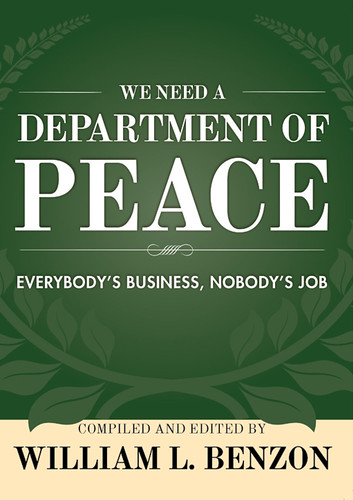
Over at 3 Quarks Daily my current post reproduces a section of a slender book I’ve put together with the help of Charlie Keil and Becky Liebman. The book collects some historical materials about efforts to create a department of peace in the federal government, starting with at 1793 essay by Benjamin Rush, one of our Founding Fathers: “A Plan of a Peace-Office for the United States.” It includes accounts of legislative efforts in the 20th century and commentary by Charlie Keil and me. The book is entitled We Need a Department of Peace: Everybody’s Business; Nobody’s Job. It’s available at Amazon and Barnes and Noble in paperback and eBook formats.

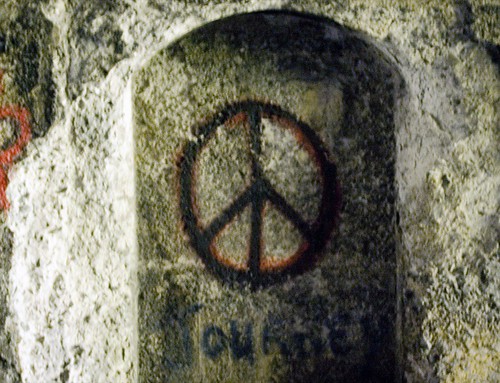
Below the peace symbol I’m including the Prologue, which is by Mary Liebman, an important activist from the 1970s. The book include other excerpts from the newsletters Liebman wrote for the Peace Act Advisory Council.

one of them old time good ones

War is not a Natural Disaster

The human race knows a lot about how to make war. We should: we’ve been doing it since Biblical times. Experts define “war” as any conflict in which the dead number more than 3,000 people. Below that number – by revolution, insurrection, armed exploration, native uprising, clan feud, violent strikes, lynching, riot, excessive partisanship of soccer fans, or plain personal murderousness – none of that counts until more than 3,000 people have been slaughtered. Then it gets in the record books as a war. Disregarding our barbarian ancestors, the Attilas and Genghis Khans for whom war was a way of life; overlooking two centuries of carnage in nine Crusades, and the Hundred year’s War, which occupied France and England for 115 years, just looking at the world since Columbus discovered America, we find that the world has been at peace less than half the time, and the wars are getting bigger and worse.

Out of this collective experience with war, we’ve learned how to do it. Homer left notes. We have the memoirs of generals and statesmen from Caesar down to modern times to guide us. There are textbooks to study. And almost everyone in government has served in the armed forces or some other war-connected duty. They understand it.

By contrast, what do any of us know about how to make peace? Nobody has ever done it. Until Hiroshima, few people talked very seriously about doing it. The Bomb changed things forever. We began to realize that no nation would ever again fight through to glorious victory. The celebrations, the cheering crowds in Times Square, the church bells ringing and the bands playing – those are sounds that belong to history. They will never be heard again at the end of any war, anywhere, by anybody. So while we are not better men than our ancestors, and maybe not much smarter, we are faced with the necessity of making peace – and nobody knows how.

Well, let’s start with what we do know. In any public undertaking, from building a dam to putting a man on the moon, we start by hiring somebody to be in charge. We give him an office, a staff, a desk, a typewriter, a telephone. We give him a budget. We say, “Begin.” It may come as something of a shock to realize that in this vast proliferating federal bureaucracy, there is no one in charge of peace. There is nobody who goes to an office in Washington and works 9-to-5 for peace, unhampered by any other consideration or responsibility. […]

War is not a natural disaster. It is a manmade disaster, directed and carried out by ordinary people, who are hired and paid by other ordinary people, to make war. It will stop when ordinary people decide that, whatever satisfactions and rewards war may have offered in the past, the risk is now too high and the return too low. If you are ready to invest in a new and exciting American enterprise, you can start by spending an hour telling your Congressman why you want a Department of Peace.

* * * * *

Mary Liebman published these words on the first two pages of the February 1973 issue of PAX, the newsletter for the Council for a Department of Peace (CODEP). It was a message she had been honing for two years and would continue for three more. We note that back then it was true, as she said, “almost everyone in government has served in the armed forces or some other war-connected duty.” That’s no longer true. Conscription ended in 1973 with the eventual result that most people in government are too young to have faced the military draft or to have friends and relatives who did.

Table of Contents

Prologue: War is not a Natural Disaster
Mary Liebman 2

What’s in this Pamphlet?
Bill Benzon 4

A Plan of a Peace-Office for the United States
Benjamin Rush 6

Comments on Benjamin Rush’s Proposal
Bill Benzon 9

Why a Department of Peace?
Fredrick L. Schuman 12

Peace is Everybody’s Business; Nobody’s Job
Mary Liebman, Bill Benzon 29

Waging Peace
Charlie Keil 36

Resolution for a Department of Peace
Charlie Keil 42

Appendix: List of Selected Peace Organizations 44
About the Authors 46

On the Republican Convention, translated for liberals by Tyler Cowen and Cass Sunstein

21 Jul

Tyler Cowen:

The Straussian interpretation of the Republican Convention is the correct one, which is perhaps one reason why Peter Thiel will be speaking there. They are not saying what they are saying, in fact they are saying “the world is going to hell, and many of those amongst us have been traitorously disloyal. That is why we scream out stupidities, debase ourselves, and court attention by waving our arms in ridiculous ways. We are a small church seeking to become larger.” Is that not how many smaller churches behave? Is that not how some of the early branches of the Christian church behaved? Did they have any influence?

Cass Sunstein:

Many Democrats do not merely disagree with the Republican Party platform and with the speakers at this week’s convention. They may even struggle to understand what they are reading and hearing.

That’s a problem for Republican politicians, who hope to connect with Democratic voters, but even more for Democrats, who hope to keep the presidency and to capture the Senate. The reason is that Republicans are appealing to deep and honorable strands in American political culture, which Democrats ignore at their peril.

The best explanation comes from New York University’s Jonathan Haidt, who has produced some of the most illuminating recent work on political psychology. Haidt’s central finding is that across many cultures, human beings have embraced five distinct moral foundations: fairness, avoidance of harm, respect for authority, purity (as opposed to disgust), and loyalty. Contemporary U. S. conservatives embrace all five; liberals emphasize the first two, but care much less about the last three.

Haidt has compiled massive evidence to support these conclusions. Conservatives and liberals agree that it’s wrong to break a promise; that’s unfair. They also concur that it’s wrong to assault someone; that’s harmful. But conservatives feel far more outrage when people have acted disrespectfully toward their superiors, engaged in what they view as a disgusting act or breached a duty of loyalty. Liberals don’t like any of those things either, but to them, avoiding unfairness and harm is much more important.

The 2016 Republican Party platform and convention may well be placing a greater emphasis on authority, purity, and loyalty than at any time since the early 1970s, when Richard Nixon underlined the need to respect authority, making “law and order” a defining Republican theme. (Ronald Reagan once starred in a movie with that title.) Increasingly, Donald Trump is echoing that theme.

Is the American Body Politic Crumbling?

5 May
The media has made a cottage industry out of analyzing the relationship between America’s crumbling infrastructure, outsourced jobs, stagnant wages, and evaporating middle class and the rise of anti-establishment presidential candidates Donald Trump and Bernie Sanders. Commentators are also tripping all over one another to expound daily on the ineffectual response of America’s political elite – characterized by either bewilderment or a dismissal of these anti-establishment candidates as minor hiccups in the otherwise smooth sailing of status-quo power arrangements. But the pundits are all missing the point: the Trump-Sanders phenomenon signals an American oligarchy on the brink of a civilization-threatening collapse.
The tragedy is that, despite what you hear on TV or read in the paper or online, this collapse was completely predictable. Scientifically speaking, oligarchies always collapse because they are designed to extract wealth from the lower levels of society, concentrate it at the top, and block adaptation by concentrating oligarchic power as well. Though it may take some time, extraction eventually eviscerates the productive levels of society, and the system becomes increasingly brittle. Internal pressures and the sense of betrayal grow as desperation and despair multiply everywhere except at the top, but effective reform seems impossible because the system seems thoroughly rigged. In the final stages, a raft of upstart leaders emerge, some honest and some fascistic, all seeking to channel pent-up frustration towards their chosen ends. If we are lucky, the public will mobilize behind honest leaders and effective reforms. If we are unlucky, either the establishment will continue to “respond ineffectively” until our economy collapses, or a fascist will take over and create conditions too horrific to contemplate.
Handwriting on the well:
Rigged systems erode the health of the larger society, and signs of crisis proliferate. Developed by British archaeologist Sir Colin Renfrew in 1979, the following “Signs of Failing Times” have played out across time in 26 distinct societies ranging from the collapse of the Roman Empire to the collapse of the Soviet Union:
  1. Elite power and well-being increase and is manifested in displays of wealth;
  2. Elites become heavily focused on maintaining a monopoly on power inside the society; Laws become more advantageous to elites, and penalties for the larger public become more Draconian;
  3. The middle class evaporates;
  4. The “misery index” mushrooms, witnessed by increasing rates of homicide, suicide, illness, homelessness, and drug/alcohol abuse;
  5. Ecological disasters increase as short-term focus pushes ravenous exploitation of resources;
  6. There’s a resurgence of conservatism and fundamentalist religion as once golden theories are brought back to counter decay, but these are usually in a corrupted form that accelerates decline.
Prospects:
Today’s big challenge is twofold. First, we need to find a way to unite today’s many disjointed reform efforts into the coherent and effective reinvention we so desperately need. This unity will require solid science, compelling story, and positive dream. Secondly, since hierarchies are absolutely necessary for groups beyond a certain size, this time we must figure out how to create healthy hierarchical systems that effectively support the health and prosperity of the entire social, economic, and environmental system including everyone within. In short, our goal must be to figure out how to end oligarchy forever, not just create a new version of it. This is a topic I will take up in my next blog.

Is universal mistrust the moral foundation of this stage of capitalist society?

31 Mar
Over at Crooked Timber Corey Robin has a post, The Bernie Sanders Moment: Brought to you by the generation that has no future. Here’s the first paragraph:
Last week I met with a group of ten interns at a magazine. The magazine runs periodic seminars where interns get to meet with a journalist, writer, intellectual, academic of their choosing. We talked about politics, writing, and so on. But in the course of our conversation, one startling social fact became plain. Although all of these young men and women had some combination of writerly dreams, none of them—not one—had any plan for, even an ambition of, a career. Not just in the economic sense but in the existential sense of a lifelong vocation or pursuit that might find some practical expression or social validation in the form of paid work. Not because they didn’t want a career but because there was no career to be wanted. And not just in journalism but in a great many industries.
The discussion has been going on a bit, as many discussions do at Crooked Timber. I was particularly struck by this observation by George Scialabba (comment 156):
It would be interesting to know, if one could quantify such things, what proportion of all the communications one receives (or better, perhaps, the stimuli one experiences) in an average day are some form of advertising or marketing. I’d guess a large majority. In which case, a hypothesis presents itself: the nature and function of human communication has altered. Through most of history, the default reaction to any communication was “this is what the speaker believes.” One needed only to judge the credibility of the speaker in order to know how to act. In the 21st century, after generations of saturation advertising, much or most of it deceptive or at least manipulative, the default reaction is “this is what the speaker, for some purpose of his/her own, wants me to believe.” Virtually all public communication may safely be presumed to be aiming at some effect, rather than simply at conveying information or conviction. Finding out what the speaker actually believes, much less what’s actually true or false, is the hearer’s responsibility: caveat auditor. Universal mistrust is the moral foundation of this stage, at least, of capitalist society. Hence, honesty is no longer the best policy.

So, what about Trump, eh?

2 Mar
I’m afraid I don’t have anything particularly insightful to say about the astonishing rise of Donald Trump. Like just about everyone else – including, who knows, even Trump himself – I didn’t take him seriously. I figured he wasn’t in it to win, just to get publicity. Now it looks like he’s stuck making a serious run for it. He’s the favorite for the GOP nomination and, after that, who knows?
On the other hand, I can’t say that, however his political viability scares me, I’m deeply surprised that something like this is happening. Some years ago, as some of you may know, David Hays and I developed a descriptive account of cultural evolution [1], which allows for radical discontinuities in historical development. It was clear to us in our original discussions back in the late 1970s and after, and it is clear to me now, that we are living in an era of discontinuity.
The ascendency of Donald Trump can certainly be read as a symptom of a deep discontinuity. But if that is so, then how can we predict the future? If the discontinuity is THAT deep, then the past and immediate present give us little or know basis on which to make predictions. We’re at sea on a strange planet.
* * * * *
In an editorial from yesterday (March 1, 2016), The New York Times suggests that the Republicans brought this on themselves:
“If a person wants to be the nominee of the Republican Party, there can be no evasion and no games,” House Speaker Paul Ryan said on Tuesday, after months of such games. He sounded naïvely unaware of the darker elements within the Republican Party, present for decades, and now holding sway: “This party does not prey on people’s prejudices. We appeal to their highest ideals. This is the party of Lincoln.”
The Republican Party is taking a big step toward becoming the party of Trump. Those who could challenge Mr. Trump — Ted Cruz and Marco Rubio — are not only to the right of Mr. Trump on many issues, but are embracing the same game of exclusion, bigotry and character assassination. That Mr. Rubio would make double entendres about the size of Mr. Trump’s hands and talk about Mr. Trump wetting his pants shows how much his influence has permeated this race and how willingly his rivals are copying his tactics.
Does this mean that the Republicans are now helpless to stop Trump from getting the nomination?

Continue reading

The demise of the nation-state in the 21st century

4 Jan
At the moment the nation-state seems to be the right and natural way for humans to govern themselves, and yet we know that it was a historical invention cobbled together and refined over decades and centuries initially in Europe and then elsewhere. Will the nation-state be the dominant form of large-scale governance by the end of this century? I think not. Writing in Eurozine, Robert Menasse sketches a case:
I have looked through the telescope and I have seen: nation-states will die. We now arrive at our topic: the European Union must inevitably lead to the extinction of nation-states. And rightly so. I won’t be able to convince the current political elites of this, nor the columnists of the national press and all the other high priests of national identity and the defence of national interests. Nor will I be able to convince them of the basic reasonableness of a post-national world-view. I may not be able to convince you either. Still, let me tell you: the sooner you understand and accept this fact, and arrange your life accordingly, the better for you and your children. That’s not an opinion. An opinion, as Hegel rightly said, is mine and is something I can just as well keep to myself. No, it is a fact. To be on the safe side, let me say in advance that I don’t believe that history has a goal, nor do I believe that it has a meaning. Historical processes, on the other hand, do exist; human life on this planet can only be conceived as the production of history, just as individual life is the production of biography, and only biography can fully determine who an individual is. To think historically and perspectivally is to establish meaning in the meaningless, to give form to the processes of life, rather than just to undergo them. In the world-view of the overwhelming majority of people today, the belief in the idea of the “nation”, the belief in its rational basis, the belief in the almost ontological and hence inextinguishable longing of human beings for “national identity”, has taken on an almost religious character. The tendencies and movements towards renationalization that we are currently seeing belong to the conflicts of faith and wars of religion that are erupting globally. Despite the historical experience of National Socialism and its bloody trail of death and destruction, the fact that countless people literally believed in it has not yet permanently shaken the faith in the idea of “nation”.
Nations, markets, aggressors:
The formation of nations was merely a historical step made in order to unite provinces and regions, to extend common law jurisdictions and above all to create bigger markets. However, nations have systematically proven to be aggressors, to be a reoccurring threat to peace and human rights – through the violent seizure of land and random drawing of boundaries through cultural spaces that have evolved over time, and above all through the constitution of communities able to define themselves only in terms of their difference to others. In these differences alone, in the construction of the idea of “national identity”, there lies an eternally smouldering potential for aggression, which in times of crises finds an outlet as hatred towards others and the persecution of supposed scapegoats. However dramatically one judges it, it is clear that the formation of nations cannot be the end of the story – as Victor Hugo realized in 1850: “A day will come when you France, you Russia, you Italy, you England, you Germany, you all, nations of the continent, without losing your distinct qualities and your glorious individuality, will be merged closely within a superior unit and you will form a European brotherhood, just as Normandy, Brittany, Burgundy, Lorraine, Alsace, all our provinces are merged together in France.” Victor Hugo was ridiculed back then, but the Franco-German war turned out to be not quite so funny, and when the people of Europe set upon one another in 1914, national arrogance turned into a multi-national tragedy, and Stefan Zweig wrote: “Nationalism has destroyed European civilization”.

Continue reading

@3QD: Obama’s Pinckney Eulogy, Ta-Nehisi Coates as “Priest”, Laudato Si’

27 Jul

The topic: The place of religious discourse in civic life.

Initially prompted by some remarks by Glenn Loury and John McWhorter from June 29, I took a close look at Obama’s eulogy for Rev. Clementa Pinckney and was stunned. The particular question that attracted my attention was the issue of Obama’s ‘authenticity’ as he enacted the role of a black preacher and transformed the eulogy into a sermon on race relations in the USA. So I transcribed part of their conversation and started thinking.

And I thought that I really ought to write a blog post addressing the authenticity issue. I ended up writing four posts. I devoted two posts to a close analysis of Obama’s eulogy, discovering – to my delight and surprise – that is exhibited ring-composition, one of my particular interests. Another post consists of transcribed conversation, the Loury-McWhorter conversation that got me started, a conversation between Pres. Obama and Marc Maron, and one between Ike Turner and Sam Phillips (the producer who discovered Elvis Presley). And my final post took up the authenticity issue, with a look into the past through Duke Ellington, Elvis Presley, and 19th Century camp meetings, and concluding with some remarks on the quasi-political quasi-religious nature of the President’s remarks.

As I was working into, through, and beyond that last post I began to think of the Pope’s recent encyclical, Laudo Si’, a religious document with tremendous political implications. That put it in the same place, in my mind, that I had just created for Obama’s eulogy. And these two statements came within a month of one another.

Is something afoot, I wondered, something between and around religion and politics?

As I was thinking about that, and thinking about what I’d write for my up-coming 3 Quarks Daily column, I listened to another Loury-McWhorter discussion, this one was about Ta-Nehisi Coates as a quasi-religious figure. I’ve read a few pieces by Coates, but nothing in the last year or so. But their remarks struck me as being reasonable. What’s more, it seems to me that they were defining this liminal space where we find Obama’s eulogy and Laudato Si’.

And that became my 3QD column, where I place those documents in evidence for a discussion of the role of religious discourse in public life. You can find that colunn HERE. Below the asterisks I place my transcription of Loury and McWhorter on Ta-Nehisi Coates.

* * * * *

Here’s the Blogginheads.tv conversation:

http://bloggingheads.tv/embed-fallback.php/36141/00:00/68:50 Continue reading

Obama’s Eulogy for Clementa Pinckney 1: The Circle of Grace

16 Jul

Make no mistake, it was a remarkable performance. Nominally a eulogy, very much a eulogy. But also a sermon on the past and future of race relations in America.

Though Rev. Pinckney’s funeral was held on June 26, and I heard of Obama’s eulogy shortly thereafter, and heard about it again, and again, I didn’t bother to watch it until a couple of days ago when I was reflecting on some remarks the economist Glenn Loury and linguist John McWhorter made about the ‘authenticity’ of Obama’s performance. After all, Obama wasn’t raised in the church. And yet he chose to don the vestments of a black preacher, the rhetorical and oratorical style, to deliver his eulogy.

I’ll get around to Loury and McWhorter in a later post. In this one I want to look at the eulogy itself, which pretty much took the form of a sermon addressed to the nation. In my preliminary analysis that sermon has five basic parts as follows:

1. Prologue: Address to his audience, quoting of a passage from the Bible.

2. Phase 1: Moves from the Clementa Pinckney’s life to the significance of the black church in history.

3. Phase 2: The murder itself and presence of God’s grace.

4. Phase 3: Looks to the nation, the role racism has played, and the need to move beyond it.

5. Closing: Amazing Grace.

In the course of this analysis I will be referring to specific paragraphs by number. I have appended the entire text to this post and have numbered the paragraphs. Furthermore, I have uploaded an analytical table I am using as I think about the text. Each paragraph appears in the table along with comments here and there. You may view or download this document here: https://www.academia.edu/14123971/President_Obama_s_Eulogy_for_Clemente_Pinckney_an_Analytic_Table

* * * * *

I want to begin by quoting from an article Michiko Kakutani published on July 4, Obama’s Eulogy, Which Found Its Place in History:

A draft of the Charleston eulogy was given to the president around 5 p.m. on June 25 and, according to Mr. Keenan, Mr. Obama spent some five hours revising it that evening, not merely jotting notes in the margins, but whipping out the yellow legal pads he likes to write on — only the second time he’s done so for a speech in the last two years. He would rewrite large swaths of the text.

Mr. Obama expanded on a short riff in the draft about the idea of grace, and made it the central theme of the eulogy: the grace family members of the shooting victims embodied in the forgiveness they expressed toward the killer; the grace the city of Charleston and the state of South Carolina manifested in coming together in the wake of the massacre; the grace God bestowed in transforming a tragedy into an occasion for renewal, sorrow into hope.

First, I would love to be able to compare Keenan’s draft with the eulogy that Obama delivered. Did that draft open with “Giving all praise and honor to God”? Did it quote Scripture at the beginning (Hebrews 11:13), as is typical of sermons? That is to say, did Keenan know he was drafting a sermon, or did that happen as Obama devoted five hours and who knows how many pieces of 8.5 by 14 lined yellow paper to the rewrite? Continue reading

Pope Francis on the Environmental Crisis

18 Jun

An article in the NYTimes opens:

Pope Francis on Thursday called for a radical transformation of politics, economics and individual lifestyles to confront environmental degradation and climate change, as his much-awaited papal encyclical blended a biting critique of consumerism and irresponsible development with a plea for swift and unified global action.

The vision that Francis outlined in the 184-page encyclical is sweeping in ambition and scope: He described a relentless exploitation and destruction of the environment, for which he blamed apathy, the reckless pursuit of profits, excessive faith in technology and political shortsightedness. The most vulnerable victims are the world’s poorest people, he declared, who are being dislocated and disregarded.

It will be interesting to see what effect, if any, this encyclical will have on world affairs. The Pope, of course, is not the first public figure to speak out on climate, and it takes more than words to change the world.

But a papal encyclical is not a speech or a white paper, it is the official expression of an institution whose history stretches back two millennia and whose constitutions live on every continent and speak a multitude of tongues. It is thus transnational in scope in a way that perhaps no other document is. And it is a teaching document (emphasis mine):

Francis has made clear that he hopes the encyclical will influence energy and economic policy and stir a global movement. He calls on ordinary people to pressure politicians for change. Bishops and priests around the world are expected to lead discussions on the encyclical in services on Sunday. But Francis is also reaching for a wider audience when in the first pages of the document he asks “to address every person living on this planet.”

Will that happen? And not just on this Sunday, but on many Sundays after, Saturdays too, and Wednesday evenings.

In part we can measure the impact of Laudato Si (Praise Be to You) by the opposition it provokes.

Yet Francis has also been sharply criticized by those who question or deny the established science of human-caused climate change and also by some conservative Roman Catholics, who have interpreted the document as an attack on capitalism and as unwanted political meddling at a moment when climate change is high on the global agenda.

Continue reading